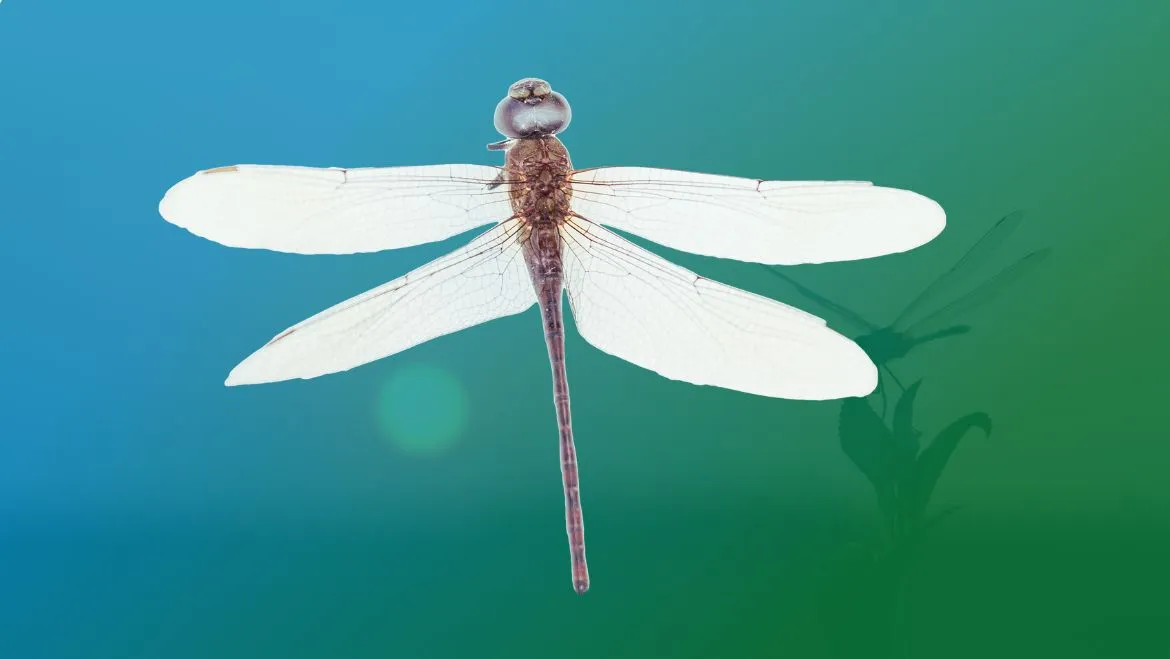
People rarely meet the dragonfly the way they expect a spirit animal to arrive. It does not descend in glory. It arrives at the edge of water, moving in a way that refuses to be tracked — hovering, darting sideways, gone, back again — and it holds itself in the air as though gravity were negotiable. What people report afterwards is not the beauty of it. It is the strange lightness that comes over them, and, underneath the lightness, an odd grief they cannot name.
This page is about the dragonfly spiritual meaning — what it means when this creature keeps appearing, in journeys, in dreams, on the water at the exact moment your life is turning. It is not about entomology. And the first thing to understand is the thing almost every article leaves out: the dragonfly you see flashing over the pond spent most of its life underwater, in the dark, as something you would not recognise. The flight is the short part. The years beneath the surface are the real story.
In my practice, the dragonfly arrives for people who are convinced nothing is happening — who feel stalled, submerged, unglamorous — and who have not yet realised that the stalled phase is the transformation. When people journey to the dragonfly, they almost never report being led anywhere. They report being unable to hold it still, and then discovering that the restlessness was the message.
The Bridge: What Dragonfly Biology Teaches About the Dragonfly Spirit Animal
Honest animal medicine is anchored in the real creature. The dragonfly’s meaning is not decoration laid over a pretty insect — it is read directly off how the animal actually lives.
- It lives most of its life submerged. A dragonfly can spend months, and in some species years, as an aquatic nymph — a fierce, unglamorous underwater hunter — and only weeks as the winged adult everyone photographs. The medicine is not “transformation is beautiful.” It is that the invisible, underwater years are where the wings are actually built. If your life feels like nothing is happening, the dragonfly is the correction.
- Its emergence is dangerous and cannot be rushed. The nymph climbs out of the water, splits its own skin, and hangs there while soft, crumpled wings fill with fluid and harden. For those minutes it can neither swim nor fly. The most vulnerable moment of its life is the moment it becomes what it was always going to be. Anyone mid-transformation knows that exposure.
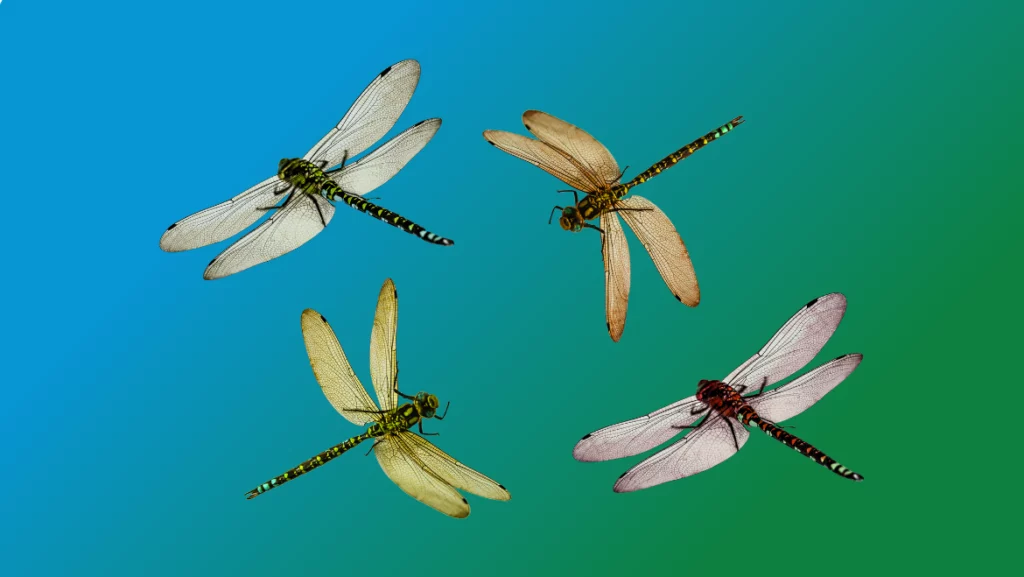
- It flies in every direction, including backwards. Four wings, each controlled independently, let it hover, reverse, and change course at speed. It is among the most successful hunters in the animal world, catching prey on the majority of its attempts. The medicine is agility, not force — the ability to move between worlds and change your mind mid-flight without losing your line.
- It sees almost everything. Its compound eyes wrap nearly all the way around its head and perceive light — including ultraviolet and polarised light — that we cannot. This is the root of its old reputation for insight: the dragonfly sees through what the rest of us are fooled by.
Put those together and the dragonfly’s message is precise: you have been developing something underwater, where no one could see it. The emergence will feel exposing. Do not force it, and do not mistake the long submerged phase for failure.
Dragonfly Symbolism Across Traditions
Wherever people have lived near still water, the dragonfly has been read as a creature of the threshold — belonging to air and water at once, and therefore able to carry things between them.
Japan: courage, and the island of the dragonfly
Japan has one of the deepest dragonfly traditions on earth. The insect — tombo — was a symbol of courage, strength and victory, worn on the armour and helmets of samurai; one old poetic name for Japan itself was Akitsushima, “the Dragonfly Islands.” Crucially, the dragonfly there is not associated with fragility. It is associated with a warrior’s forward momentum: it was admired as a creature that does not fly backwards in retreat but drives ahead. Held next to the biology — an insect that literally can reverse but chooses its line — this is a subtle and useful teaching about knowing your direction.
Pueblo peoples of the American Southwest
Among several Pueblo peoples — the Hopi and Zuni in particular — the dragonfly appears in pottery, textiles and story as a figure tied to water and to swift, life-bringing messengers in a desert land where water is survival. These are living traditions belonging to specific nations, and I name them precisely rather than writing “Native American,” because flattening dozens of distinct cosmologies into one is its own kind of erasure. What carries across respectfully is the association: in a dry country, the creature that hovers over water is a bringer of what the land most needs.
Europe: the split reputation
European folk tradition is more suspicious, and the suspicion is instructive. Old country names — “devil’s darning needle,” “ear-cutter,” “horse-stinger” — cast the dragonfly as something that might sew shut the lips of liars or punish the wicked, and in parts of Scandinavian and Baltic folklore it was linked to the weighing of souls. None of this is true to the harmless insect, but it tells you something real: a creature that sees everything and cannot be caught makes people who have something to hide deeply uncomfortable. That discomfort is worth noticing if the dragonfly keeps arriving for you.
Across all of it, the pattern holds. The dragonfly belongs to the boundary between the water and the air — between the emotional depths and the clear light — and it appears precisely when you are crossing from one to the other.
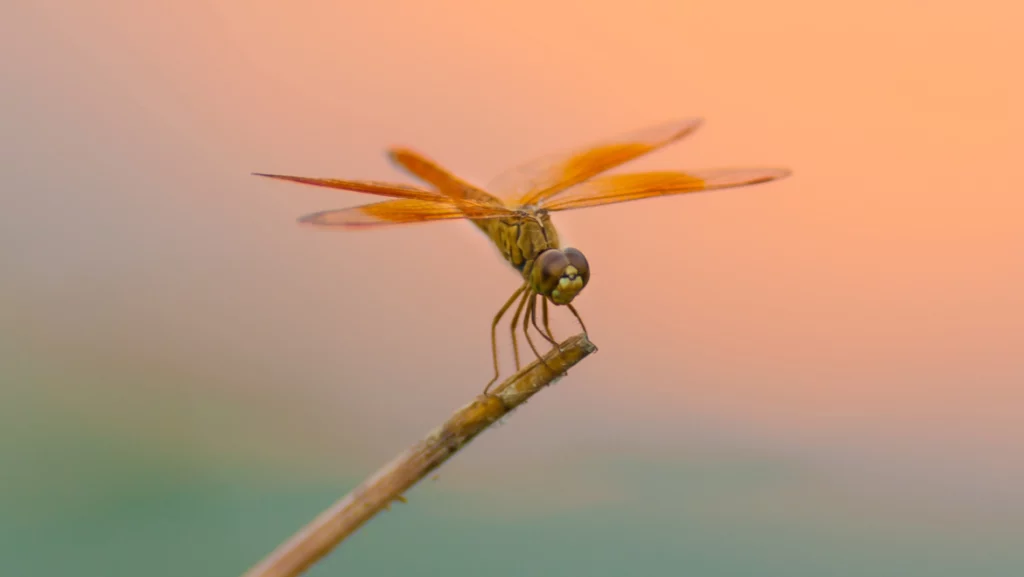
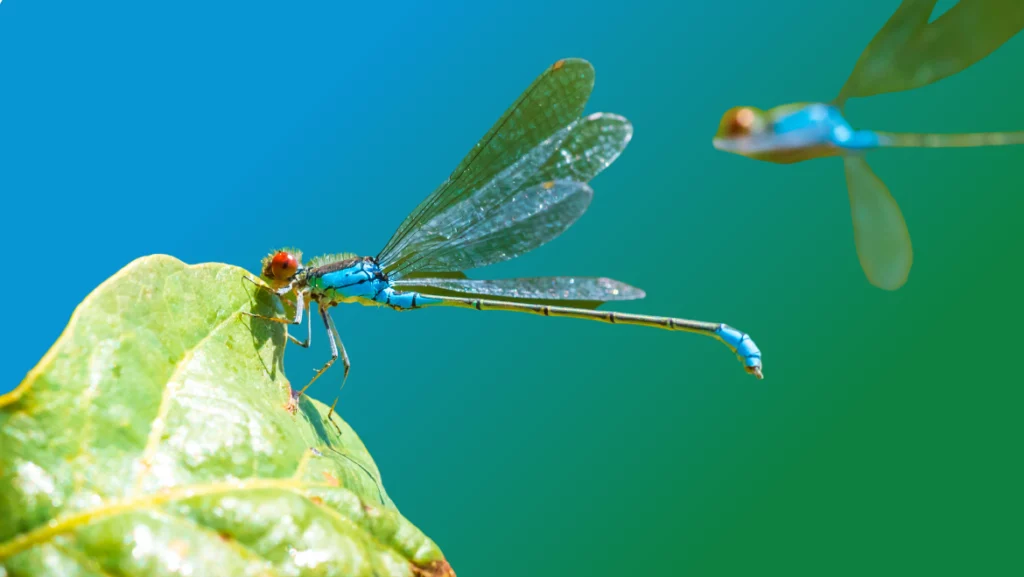
The Shadow of Dragonfly Medicine
The dragonfly is one of the most sentimentalised spirit animals there is — all iridescence and “embrace change” — which is exactly why its shadow goes unexamined for years.
- Never landing. The most common distortion I encounter is the person who is perpetually “in transition” and never actually lands in a life. Another course, another move, another reinvention — the constant motion mistaken for freedom. The dragonfly can hover indefinitely, and its shadow is a human being who has made hovering a permanent address.
- Skimming the surface. The adult dragonfly lives above the water it was born in. Its shadow is the person who touches every emotion at the surface — light, quick, charming — and never dives, even though the deep water is literally where they came from. Iridescence used to avoid depth is still avoidance.
- Forcing the emergence. The opposite failure. People in the submerged phase often cannot bear the not-knowing, and they haul themselves out before the wings have hardened — naming the new identity, taking the offer, announcing the change — while they are still soft. It does not hold, and they blame themselves rather than the timing.
- Change as its own addiction. “Transformation” can become a way of never having to be anything in particular. The dragonfly changes form once, completely, and then commits to being what it became. Endless change is not the medicine; it is the shadow wearing the medicine’s colours.
A dragonfly appearing in a dream with torn or crumpled wings usually points to a transformation that was begun and then abandoned, or forced open too early. A dragonfly trapped indoors, battering a window speaks to a life that has become too small for the change already underway in you. And a dragonfly frozen, unable to leave the water is one of the clearer images of a person who knows it is time to emerge and cannot yet make themselves do it.
The Path of the Paws
42 hand-illustrated oracle cards, one for each animal guide — drawn from the same practice these articles come from. A way to sit with an animal instead of only reading about it.
Order your deck →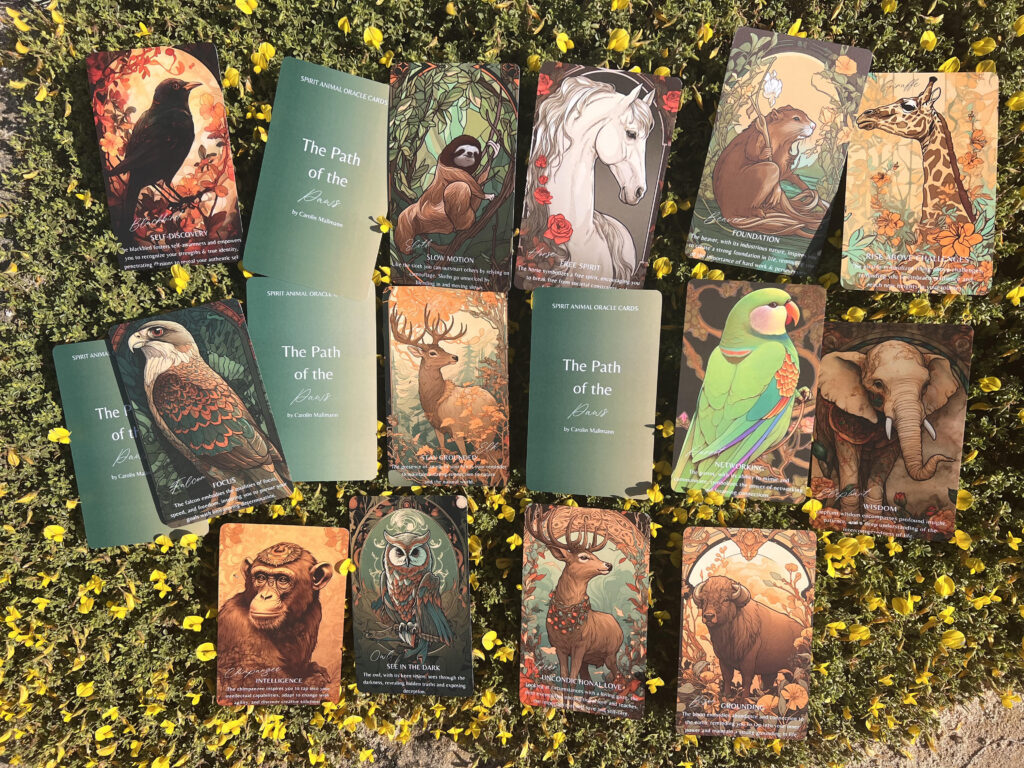
How to Journey to the Dragonfly
Shamanic work is not a substitute for medical or psychological care. If you are new to this, begin with the beginner’s guide to shamanic journeying before attempting the practice below. This is a water journey, and it asks you to go down before you go up.
- Name what feels stalled. Before you begin, write one sentence: the part of my life where nothing seems to be happening is … The dragonfly works on exactly this material, and it responds to honesty rather than to hope.
- Enter through still water. A pond, a slow river, the reeded edge of a lake. Let a steady drumbeat carry you and stand at the waterline.
- Go under first. Do not look for the winged adult. Descend into the water as the nymph and ask: what have I been building down here that I have not been able to see? This is the part people skip, and it is the part that matters.
- Find the stem and climb. When it is time, follow a reed upward and out into the air. Notice how exposed the emergence feels. Do not rush it.
- Let it move, and do not chase. When the dragonfly appears, it will not hold still. Following it with your attention is how people lose it. Stay where you are and let it pass in and out of your field.
- Ask one question on the way back: “What is ready to harden, and what is still too soft to be tested?”
- Integrate by not deciding. For seven days after the journey, make no irreversible move on the thing that is transforming. Let the wings harden. Notice how strongly you want to rush it — that urgency is the shadow, and watching it is the work.
Dragonfly Spirit Animal: Questions People Actually Ask
What does it mean when a dragonfly lands on you?
Dragonflies land to rest and to warm themselves, which is the ordinary explanation and does not cancel the other one. Traditionally it is read as a moment of contact from something that has already made the crossing you are in the middle of. What matters is what you were preoccupied with in the seconds before it landed — that is usually the subject of the message, not the insect itself.
Is the dragonfly a good omen?
In most traditions where it appears, yes — it is a bright, benevolent sign of change and clear sight. But it is an omen that asks something of you. The dragonfly brings the promise of transformation and then waits to see whether you will let the submerged phase complete instead of forcing it. An omen you rush is just a startled insect.
What does a dragonfly in a dream mean?
Read what it is doing. A dragonfly hovering over clear water usually speaks to intuition running clean and a change you can see coming. A dragonfly with damaged wings points to a transformation begun and abandoned. A dragonfly trapped indoors points to a life that has grown too small for what is emerging in you.
What does it mean when a dragonfly keeps appearing?
Repeated dragonfly encounters point to a transition rather than a single event — usually one you have been treating as a delay. The message is generally the same: something has been developing where you could not watch it, and it is closer to the surface than you think. If the transformation rather than the surface shimmer is what you recognise, read the butterfly spirit animal next, which dissolves entirely before it rebuilds.
If you want a structured way to test the connection rather than guess at it, work through the A–Z spirit animal guide, take the journey work step by step in the guide to finding your spirit animal, or sit with the Path of the Paws oracle deck and let the animal find you rather than the other way round.
Is the Dragonfly Your Spirit Animal?
Check the boxes that resonate with your spirit and current life journey.
What has been developing in you underwater, where no one could see it — and is it closer to the surface than you have let yourself believe?