People usually ask me what shamanism is as though there were a single sentence waiting at the end of the question. After more than two decades of practice, the honest answer is that shamanism is less a belief you hold than a relationship you live — with nature, with the unseen, and with the parts of yourself you have not yet met. It is very probably the oldest spiritual practice of humanity, and it survives not because of doctrine but because it does something people still need: it puts you back into contact with a living world.
This guide can never be complete — shamanism most likely emerged in Siberia and is now practised, or at least called by that name, all over the world. What I can offer is a clear, grounded map: where it comes from, what its core principles actually are, what practitioners do, and why so many people in the modern West are quietly finding their way back to it.
What Is Shamanism, in Plain Terms?
At its core, shamanism is about connection — to nature, to the spirit world, and to the inner depths of a life. The shaman is understood as an intermediary between the ordinary, physical world and the unseen one, someone who can enter altered states of consciousness deliberately and travel into other realms to bring back healing, guidance and wisdom for their community. The word itself comes from the Tungus saman, often translated as “one who knows,” or “one who becomes heated” in the ecstatic work of the trance.
It is worth being precise about one thing straight away: not everyone who studies shamanism is a shaman. In traditional societies the shaman held a specific, demanding role within a community. Most people in the West who work this way — myself included — more accurately call themselves shamanic practitioners. The distinction matters, and respecting it is part of doing this work honestly.
Where Shamanism Comes From
Shamanic practices most likely originated some ten thousand years ago in Siberia and Central Asia, where early humans used trance states — induced by drumming, dancing and singing — to enter what they experienced as the spirit world and to communicate with the forces of nature. The term “shaman” reached the West through Russian encounters with Siberian peoples in the sixteenth and seventeenth centuries, and only gradually became the umbrella word we now apply, sometimes loosely, to practices all over the globe.
What is striking is how widely the same essential pattern appears — across Siberia, Asia, the Americas, Africa and Australia — among cultures that never met. Each adapted it to its own landscape and needs: Siberian practitioners journey by drum, while many Amazonian traditions work with plant medicines such as ayahuasca. Despite the differences, the shared elements are unmistakable: a belief in an unseen world inhabited by spirits, and a specialist who can move between that world and this one on the community’s behalf.
The academic study of shamanism took shape in the late nineteenth and early twentieth centuries. The historian of religion Mircea Eliade famously described it as a set of “archaic techniques of ecstasy,” underlining its global reach. Later, the anthropologist Michael Harner distilled the shared elements of many traditions into what he called Core Shamanism — the journey, the spirit helpers, the healing techniques — and made them accessible to Western students through his book The Way of the Shaman. Much of the practice taught in the West today descends from that lineage.
The Core Principles of Shamanism
Beneath the enormous variety of practices, a few principles recur so consistently that they can fairly be called the foundation of the shamanic worldview.
- Everything is alive and interconnected. Humans, animals, plants, rivers, stones — all are understood to be imbued with spirit and bound together in a single web of life. Every action ripples through the whole, which is why living in relationship, rather than in dominance, sits at the centre of the ethic.
- Reality has more than one layer. The shamanic cosmos is usually divided into the Lower, Middle and Upper Worlds — realms beyond the physical, inhabited by ancestors, spirit guides and other beings, which the practitioner learns to visit consciously.
- Consciousness can be shifted, on purpose. The heart of the practice is the deliberate, controlled entry into an altered state — through drumming, dance, fasting, or in some traditions sacred plants — in order to perceive and act in those other realms.
- Healing means restoring balance. Shamanic healing addresses far more than the body: it works with soul loss, spiritual blockage, and the recovery of vitality, always with the aim of returning a person — and their community — to harmony.
- Experience outranks doctrine. Unlike traditions built on scripture, shamanism trusts direct, personal encounter. Your own journey, your own contact with the spirit world, is the teacher. No one can have that experience for you.

What Shamanic Practitioners Actually Do
Principles become real through practice. These are the methods at the centre of the work — the ones I return to most often with the people I sit with.
The Shamanic Journey
The journey is the most fundamental practice: a trance state, usually carried by steady drumming, in which the practitioner travels into non-ordinary reality to seek wisdom, guidance and healing from spirit allies. It is a learnable skill, not a special gift, and it is where most people begin. If you want to understand the mechanics of it, start with the guide to what shamanic journeying is.
The Three Worlds
Most shamanic journeys move through one of three realms, and knowing which one you are working with shapes everything.
- The Lower World is not “lower” in any moral sense — it is the deep, earthy, primal realm reached by descending, through a cave, a root, a tunnel. It is the home of power animals and ancestral wisdom, a place of grounding and healing rather than danger.
- The Upper World is the luminous, celestial realm of higher spirit teachers and guides — reached by rising, and sought for inspiration, blessing and advanced spiritual knowledge.
- The Middle World mirrors our own — it is the spiritual dimension of this physical reality, home to the spirits of land, trees, water and living things, and the place where much practical work with the here and now is done.
Soul Retrieval
In the shamanic understanding, trauma and shock can cause part of the soul to dissociate — to leave, in order to survive something unbearable. Soul retrieval is the work of journeying to recover those lost parts and restore a person to wholeness. It is one of the most profound pieces of this tradition, and you can read about it in depth in the guide to soul retrieval.
Power Animals and Spirit Guides
Many traditions work with power animals — spirit guides in animal form that protect, strengthen and counsel the people they walk with. A practitioner may journey to find someone’s power animal and bring its guidance back to them. This relationship is at the heart of my own work; the whole territory is mapped in the A–Z spirit animal guide, and if you would like to meet your own, begin with finding your spirit animal.
Drumming, Chanting and Ceremony
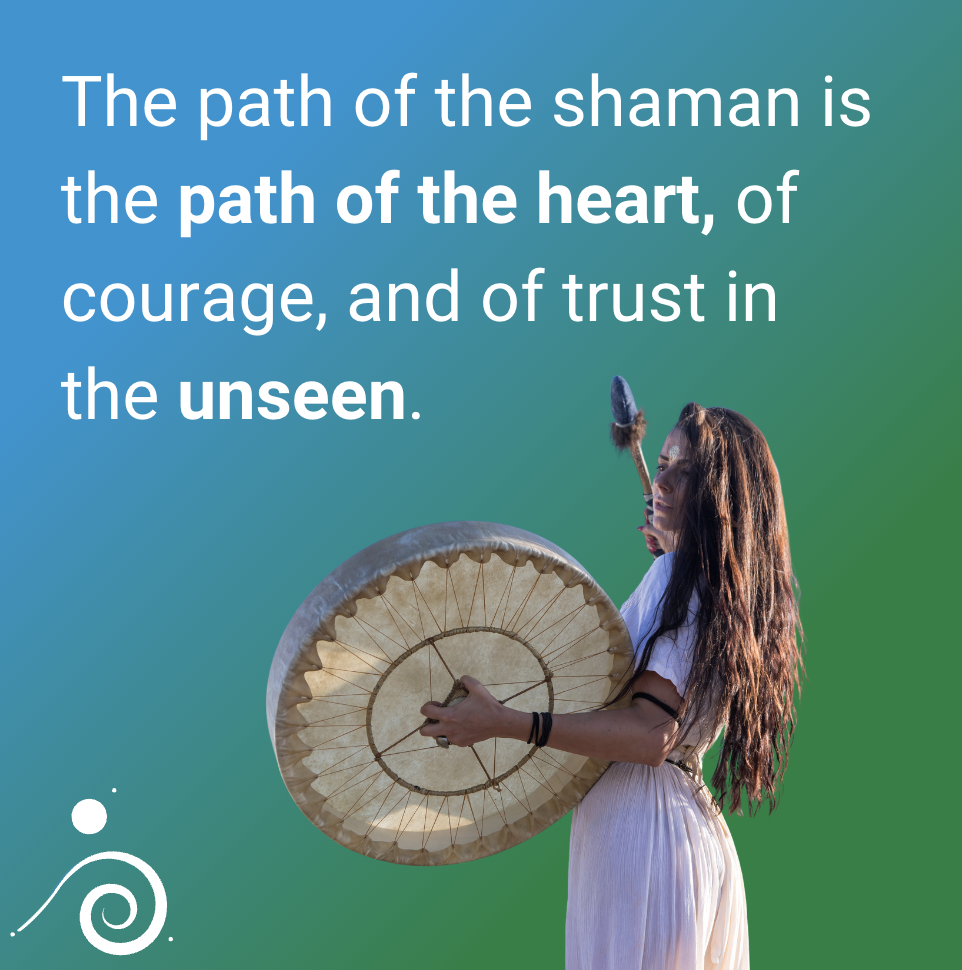
For shamans the drum is often revered as the heartbeat of the earth. Its steady, repetitive rhythm both induces the trance state and acts as a bridge between worlds, carrying the practitioner’s awareness out and back. Chanting, song and ritual work in the same way — not as performance, but as calls to the spirits and as vessels for healing and transformation. Cleansing rites, offerings, and seasonal ceremonies round out the practice, all built on the same reciprocal relationship with the unseen.
A Note on Divination
Shamans have long used forms of divination — reading natural signs, casting bones or stones, communing directly with spirits — to gain insight and diagnose what is out of balance. I want to be honest here, because it is often blurred: many popular divination tools (oracle cards, crystals, runes, the I Ching, pendulums, scrying, tea-leaf reading) are not part of ancient Siberian shamanism at all. They come from other traditions entirely. They can be genuinely useful contemplative tools, and we share knowledge about them in that spirit — but calling every intuitive practice “shamanic” muddies something worth keeping clear.
The Path of the Paws
42 hand-illustrated oracle cards, one for each animal guide — drawn from the same practice these articles come from. A way to sit with an animal instead of only reading about it.
Order your deck →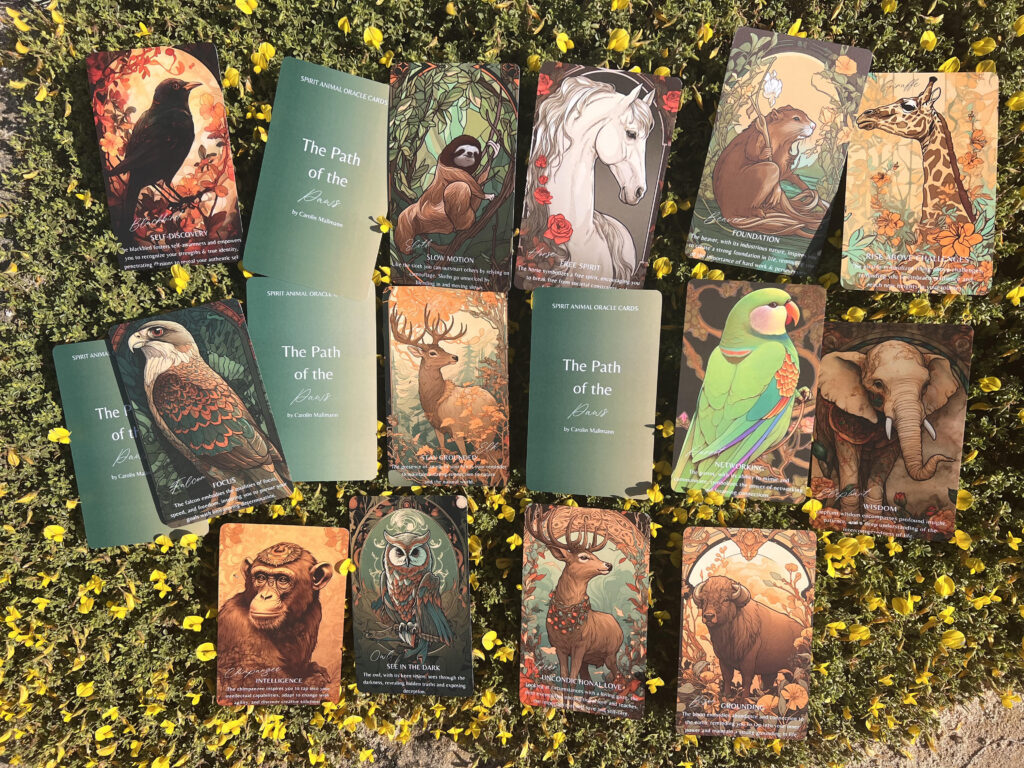
The Role of the Shaman
In traditional societies the shaman was never simply a ritual technician. They were, all at once, the community’s healer and its mediator with the spirit world; the keeper of its stories, songs and ancestral wisdom; a counsellor and leader in times of conflict or change; and often a steward of the land itself. To be a shaman was to hold responsibility for the balance between the human world and the natural and spiritual worlds — the very balance that so many people today feel has gone missing.
Shamanism in the Modern World
Far from being a relic, shamanism has seen a genuine resurgence — and in my experience it is not hard to see why. A great many people arrive at this work disillusioned with a purely materialistic, mechanistic picture of life, and hungry for something more directly felt. What they find is a practice that begins, almost always, inward. In more than two decades of guiding people through their first journeys, I have watched the same thing again and again: before shamanism connects someone to the wider spirit world, it reconnects them to the parts of themselves they had lost touch with.
That is why, for many Westerners, shamanism functions above all as a path of self-discovery and healing — and there is nothing lesser about that. Today it is often woven together with psychotherapy and holistic medicine, offering a way to address the emotional, spiritual and mental dimensions of well-being alongside the physical. It builds community, through drum circles and healing circles, in a culture where many feel isolated. And its deep reverence for nature speaks directly to a time of ecological crisis: the shamanic insight that the earth is sacred, and that we are responsible to it, is no longer a fringe idea but an urgent one.
A word of care, since the field is crowded and not always careful: shamanic work is powerful, but it is not a substitute for medical or psychological treatment, and it should be approached with respect for the living traditions it draws from. Done honestly, it does not promise miracles. What it offers is a grounded path back into relationship — with the world, and with yourself.
What Is Shamanism? Questions People Actually Ask
Is shamanism a religion?
No. Shamanism has no scripture, no central deity and no institution. It is a set of practices and a worldview — focused on direct experience, connection with nature, and journeying between worlds — that has coexisted with many different religions rather than competing with them. People of many faiths, and of none, work shamanically.
What is the difference between a shaman and a shamanic practitioner?
A shaman traditionally holds a specific, sanctioned role within a particular culture and community. A shamanic practitioner — the more accurate term for most people trained in the West — works with shamanic methods such as journeying and energy healing without claiming that inherited cultural title. The distinction is a matter of honesty and respect.
Do you need plant medicine to practise shamanism?
No. While some traditions, particularly in the Amazon, work with sacred plants, the classic Siberian and Core Shamanic path reaches altered states through drumming, rattling, chanting and dance — no substance required. The great majority of the practice taught and worked in the West is entirely drug-free.
Can anyone learn shamanic journeying?
In my experience, yes — journeying is a learnable skill rather than a rare talent. Most people can reach a light trance with steady drumming and clear intention, and deepen it with practice. The best place to start is a simple, well-guided first journey; see the guide to shamanic journeying.
Where should a beginner start?
Begin inward and begin simply. Learn to journey, meet a power animal, and build a relationship with it before reaching for anything elaborate. Working with your own spirit animal is one of the gentlest and most rewarding ways in, and it teaches the foundational skill — trusting direct experience — that the rest of the practice is built on.
Comprehensive Shamanism Online Training
Join our empowering shamanism training series, “The Elements of Shamanism,” to learn shamanic practices through the lens of the elements: Water, Earth, Fire, and Wind. This course is perfect for anyone who wants to start their shamanic path to improve their own life. Through the online classes, you will learn key skills like shamanic journeying, connecting with spirit animals, and exploring your ancestral lineage.
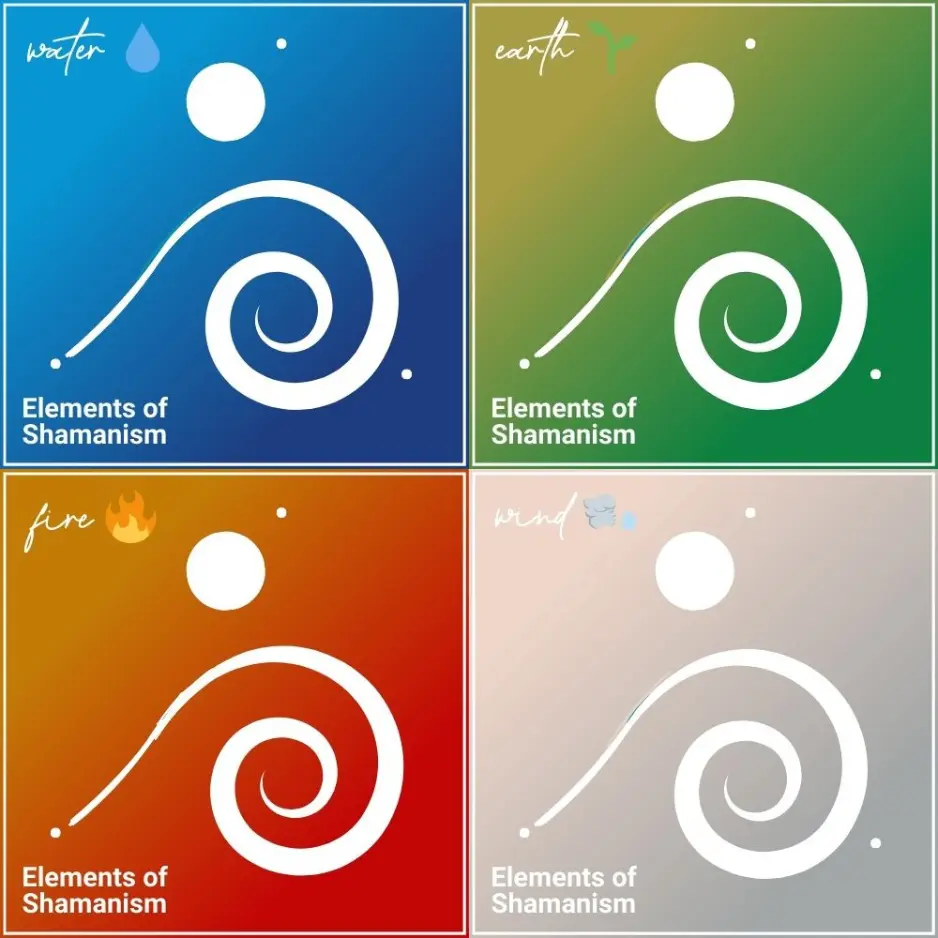
“The Elements of Shamanism” is a course that invites you to embrace your personal power with some of the most important techniques of shamanism.